
The Fuzzy Story
Fuzzy Tacos Food Truck started as a running joke between friends. Founders Joe and Carmen Diaz spent late nights passing around homemade tacos and arguing over what made the perfect one—not too dry, not too fancy. The goal wasn't perfection; it was feeling.
The name came when someone called the vibe "a little messy, a little weird… kind of fuzzy around the edges." It stuck.
They started with a borrowed truck, a cooler, and a handwritten menu. Word spread fast—not just because the food hit, but because of the energy: music spilling out, strangers turning into regulars, regulars turning into friends.
Today the menu's bigger and the lines are longer, but the heart's the same: good food, no pressure, and just enough personality to keep things interesting.
The Tasty Challenge
Fuzzy Tacos has the heart, the regulars, and the story — but the brand hasn't caught up. Design an identity that fixes three things:
A new look that feels "fuzzy." Messy, warm, a little weird — but consistent across the truck, menu, social, and signage.
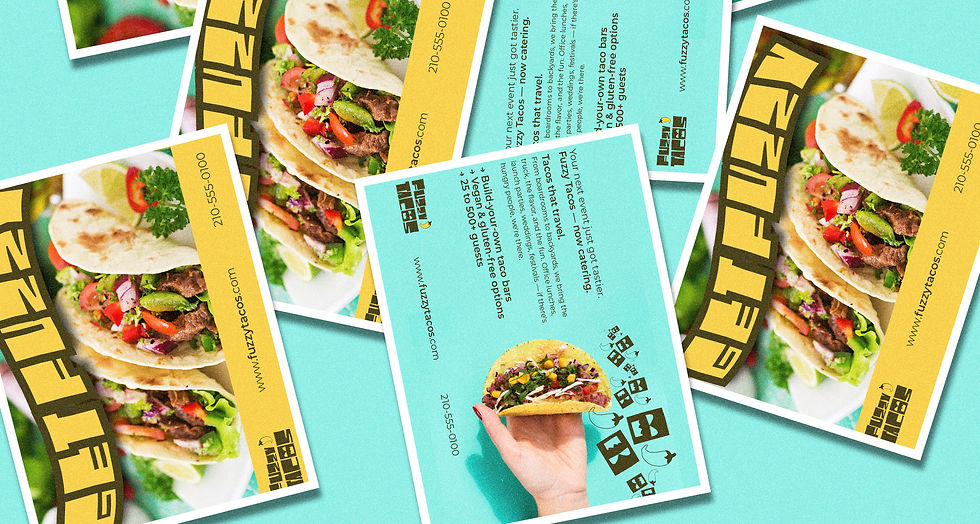
More presence with local businesses. Create the touchpoints that put Fuzzy Tacos in front of nearby offices and shops, so they're the go-to
lunch pick.
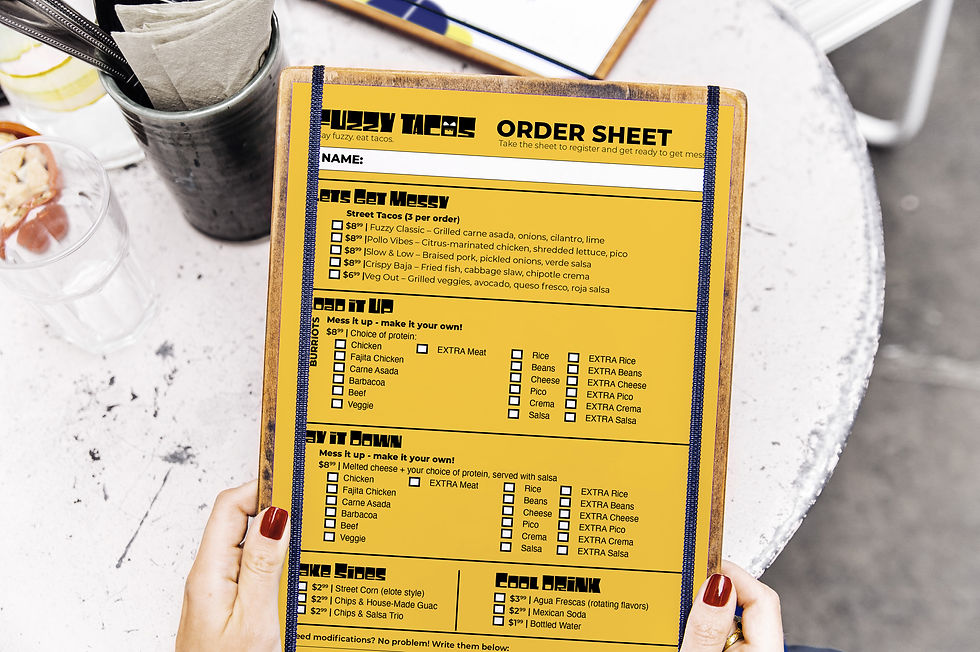
More catering bookings. Make booking as easy as walking up to the truck — clear menu, clear pricing, no friction.
The bar: Someone should spot it across a parking lot, feel the vibe, and know how to book it for Friday's office lunch.






The Fuzzy-Alt
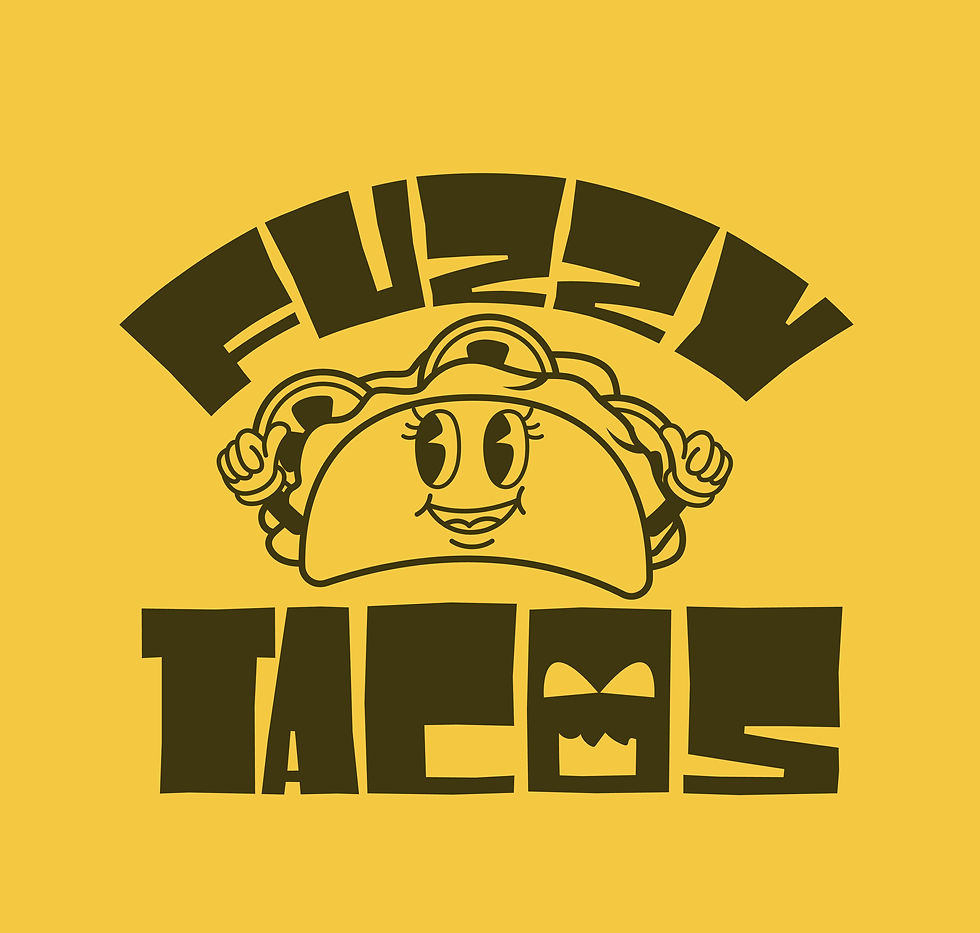
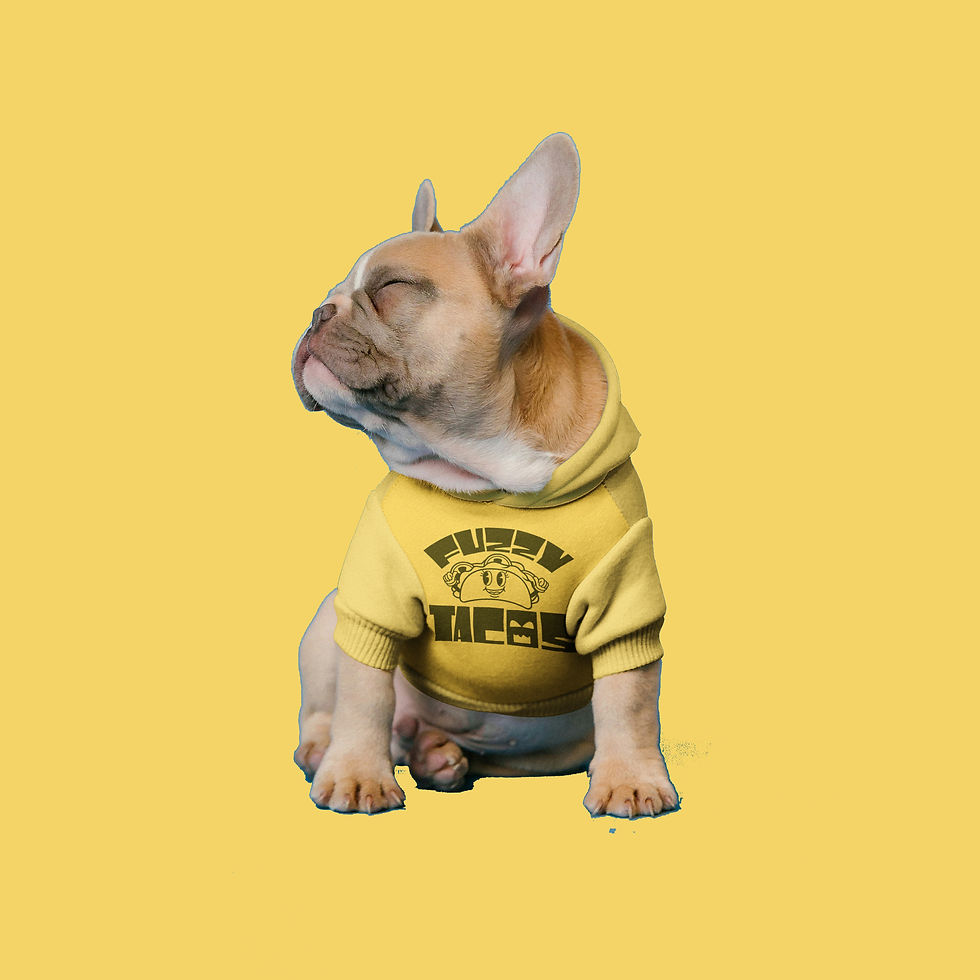
The retro cartoon mascot is instantly likable and impossible to forget — exactly what a food brand needs to stand out at festivals and in corporate lots. The bold two-tone palette prints cleanly on anything, from truck wraps to napkins, and the vintage character gives Fuzzy Tacos the kind of personality that turns first-time customers into regulars.

Made With Human Hands, Robot Brains, and One Too Many Adobe Tabs Open
This project was a group effort — if by "group" you mean one human, a few robots, and an unhealthy amount of Adobe CC. Claude and a handful of other AI tools were consulted for research and wireframing (they had opinions; most were ignored). Figma handled design and layout, because some of us still like to feel in control. Adobe Creative Cloud did the heavy lifting on typography, layout, photo editing, and mockups — as it has, loyally and expensively, for years.
© 2026 by Sluggo Creative