


The Freezing Truth
Outdoor enthusiasts who invest in quality camping experiences have no reliable, user-friendly way to precisely manage food and beverage temperature in the field. Existing solutions either require constant ice management or offer smart technology wrapped in frustrating, inaccessible software — leaving users with spoiled food, wasted money, and no confidence in their gear."




The Brand
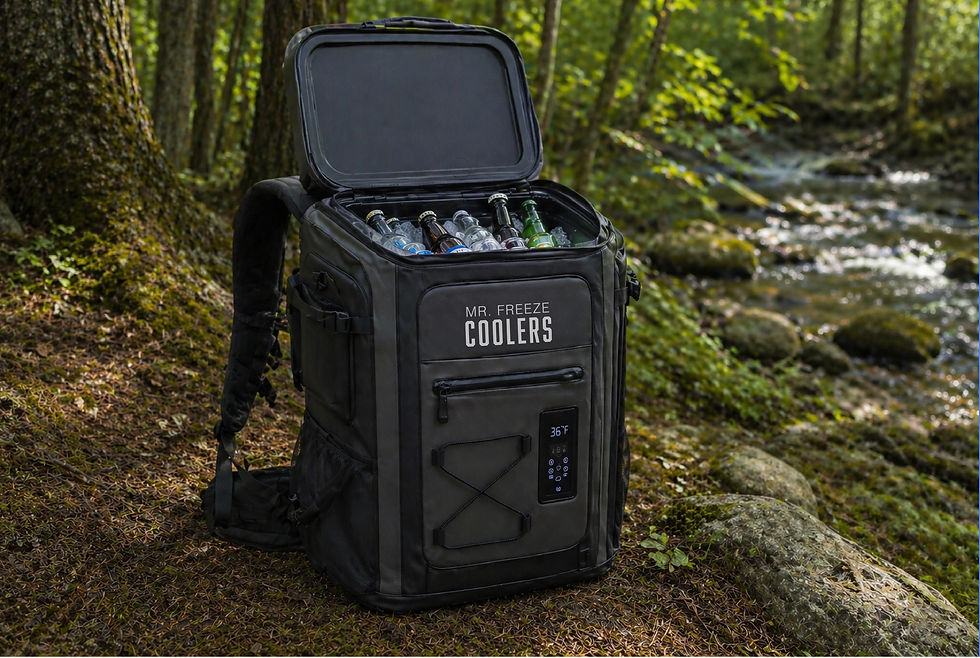
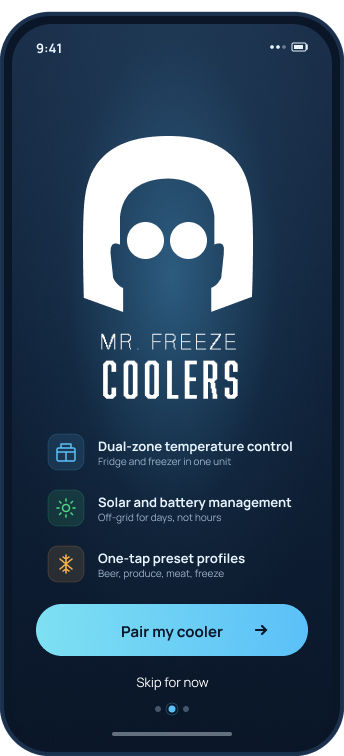
Victor Fries was a brilliant cryogenics scientist who, after a tragic lab accident, couldn't survive outside sub-zero temperatures. We can't help with the whole "ice suit" situation - but we did ask ourselves: what if his obsession with cold wasn't a curse, but a product roadmap? Enter Mr. Freeze Coolers, temperature-controlled camping coolers built for people who believe lukewarm beer and spoiled guacamole are genuine outdoor emergencies. While Mr. Freeze (the villain) was trying to freeze all of Gotham, we're just trying to keep your salmon at 38°F and your IPAs at a dignified 35°F. Much more reasonable goals. No hostages required.
The science is real, though. Traditional passive coolers rely on ice — which melts, creates water, and turns your sandwich into a wet disappointment. Mr. Freeze Coolers use thermoelectric cooling (Peltier effect) and optional compressor-based refrigeration to maintain precise temperatures regardless of ambient heat. Think of it as your cooler having a PhD in thermodynamics, while your ice chest has a participation trophy.
Key Findings
Ice is a logistical nightmare
74% of campers surveyed report buying ice at least twice per trip. Wet coolers contaminate food, reduce usablestorage by ~30%, and require constant draining. The actual cooling efficiency of a typical 50-qt ice chest drops to near zero within 48–72 hours in summer heat.
Food safety is a real concern
The USDA's "danger zone" for bacterial growth is 40°F–140°F. Passive coolers frequently drift into this range. A compressor-based cooler maintains a consistent 34–38°F, reducing foodborne illness risk significantly on multi-day trips.
Power is no longer the barrier it was
The rise of portable power stations (Goal Zero, EcoFlow, Jackery) means campers now have 12V and USB-C power available at camp. 58% of overlanders already own a portable power station as of 2023.
$1.8B
Global Market size (2024)
Portal cooler market
6.4%
Projected CAGR
through 2030
$15-40
Avg. Ice Cost
Per weekend trip
The Challenge
Outdoor enthusiasts who invest in quality camping experiences have no reliable, user-friendly way to precisely manage food and beverage temperature in the field. Existing solutions either require constant ice management or offer smart technology wrapped in frustrating, inaccessible software — leaving users with spoiled food, wasted money, and no confidence in their gear."
The Users
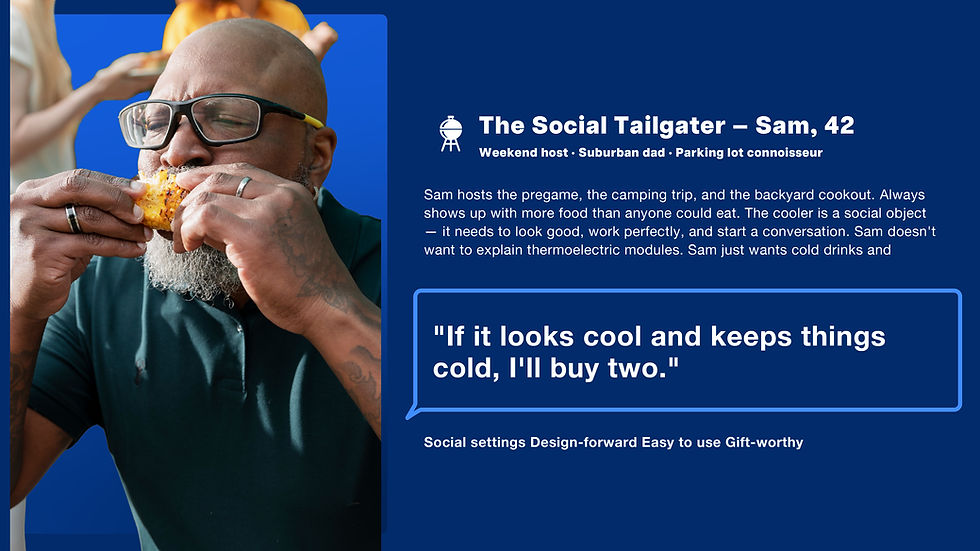
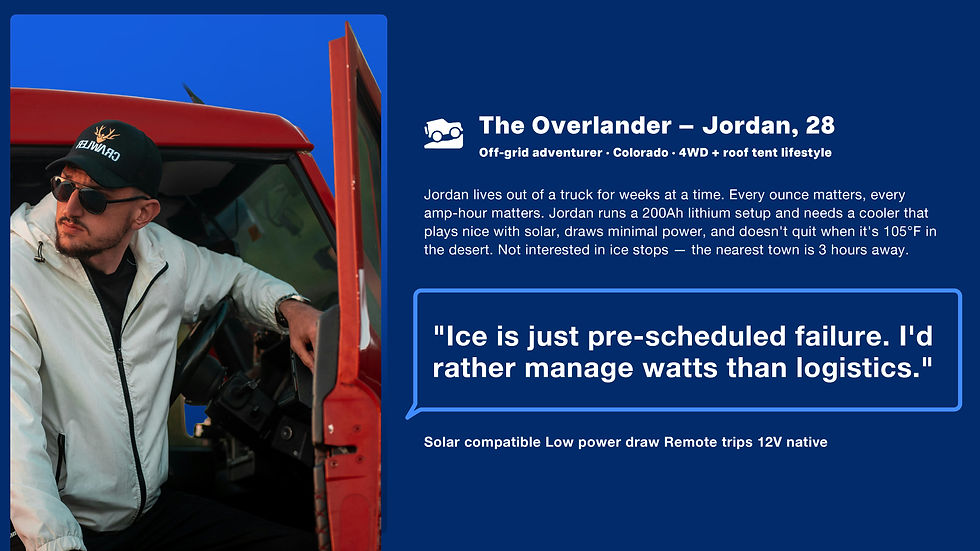
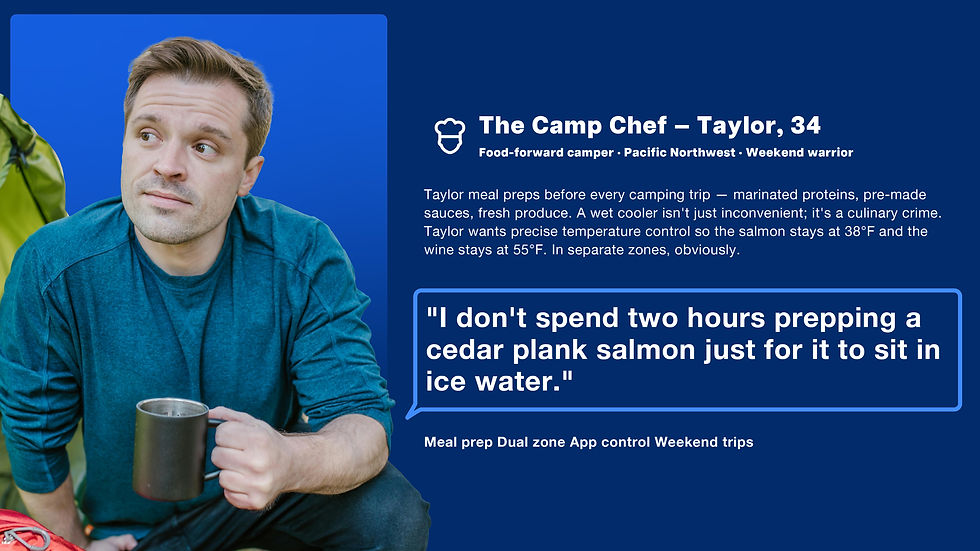
The Solution




Made With Human Hands, Robot Brains, and One Too Many Adobe Tabs Open
This project was a group effort — if by "group" you mean one human, a few robots, and an unhealthy amount of Adobe CC. Claude and a handful of other AI tools were consulted for research and wireframing (they had opinions; most were ignored). Figma handled design and layout, because some of us still like to feel in control. Adobe Creative Cloud did the heavy lifting on typography, layout, photo editing, and mockups — as it has, loyally and expensively, for years.
© 2026 by Sluggo Creative